By July 2026, the median list price for a home in Alamo sat at $3.54 million, with properties spending a median of 35 days on the market. Four months earlier, in March 2026, homes in the 94507 zip code specifically were selling in a median of just 10 days for $2.5 million. Same town, different snapshots, and the numbers describe two different markets moving at two different speeds.
Price alone doesn't explain the gap. A $2.5 million home and a $3.5 million home can both attract multiple offers in Alamo's tight inventory. What actually separates the fast closings from the slow ones is what sits underneath and around the lot: whether the property connects to public sewer or relies on a septic system, whether it has oak trees old enough to require a county permit before you touch them, and whether the driveway crosses a road someone else legally owns a piece of. None of that shows up in the listing photos.
Same Town, Two Different Escrows
Most of Alamo runs on the Central Contra Costa Sanitary District sewer grid, the same infrastructure serving much of the East Bay. But a meaningful share of Westside and foothill estate parcels still operate on private septic systems, a holdover from when those lots were developed before sewer lines reached the hills. If you're comparing two Alamo listings with similar square footage and similar price tags, one on a sewer-connected street and one tucked into the foothills, you are not comparing two versions of the same transaction. You're comparing a straightforward closing to one with three additional items that need to clear before you can remove contingencies.
What's Actually Under the Lot
California requires sellers to disclose whether a property is served by public sewer or a private septic system, and that disclosure lives on the Transfer Disclosure Statement under Civil Code section 1102. It's a factual checkbox, but the consequences behind it are not small. A septic system that's aging, undocumented, or has a history of drain field saturation can stall a loan entirely, since most lenders will not fund against a failed system without a repair or an escrow holdback in place first.
For a buyer, this means the due diligence period on a septic property involves work that a sewer-connected home never requires: pulling pumping records, scheduling an inspection if one isn't already on file, and confirming the system's permitted capacity matches the home's actual bedroom count. None of this is unusual for rural or semi-rural California real estate. It is unusual if you assumed every Alamo property works the same way, and it's exactly the kind of detail that can turn a listing that should move in days into one that lingers for weeks, whether that shows up in time on market or time spent clearing contingencies once you're already in contract.
The Oaks Come With Paperwork
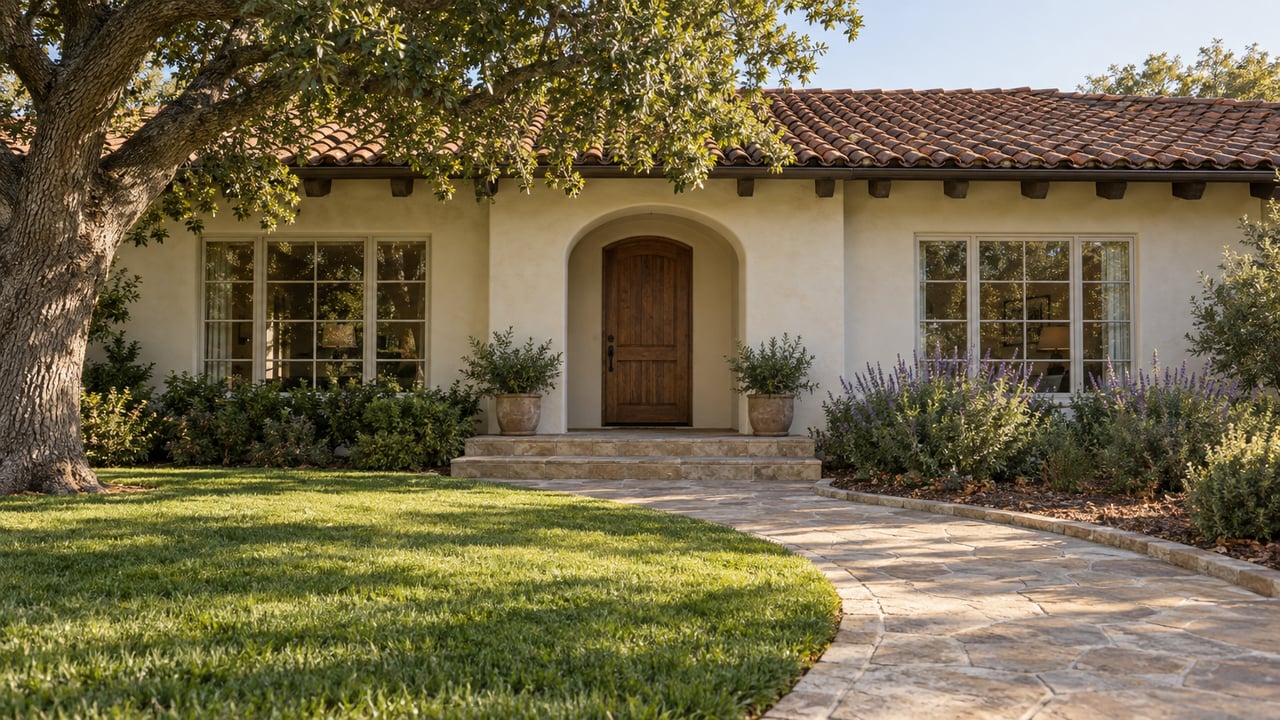
Alamo's tree canopy is part of what makes the foothill lots desirable, and it's also part of what makes them harder to renovate. Contra Costa County's tree protection ordinance covers native oaks, bays, and buckeyes once they cross size and species thresholds set out in the county code, and Contra Costa County says a permit is required before anyone cuts down or works within the dripline of a protected tree. According to UC Agriculture and Natural Resources, trees the Board of Supervisors designates as heritage specimens, meaning a circumference of 72 inches or more, carry the strongest protections of all and can't be touched without county sign-off.
What that means in practice: if you're buying an Alamo estate lot with plans to add an ADU, expand a footprint, or regrade part of the yard, and there's a mature oak anywhere near the work area, you may need a discretionary permit, an arborist report, and a tree protection plan before the county signs off. Ministerial permits for dead or hazardous trees can move quickly. Discretionary permits tied to development can take weeks to months, particularly if the tree sits within a woodland or riparian area the county has flagged for preservation. If your offer assumes a fast timeline to breaking ground, check the trees before you write it.
The Road You Don't Own
Alamo's rural character means some properties, particularly in the gated and semi-gated pockets, sit off private roads rather than county-maintained streets. Under California Civil Code section 845, the owner of an easement is responsible for maintaining it, and when multiple parcels share that easement, the cost of upkeep is split according to whatever agreement exists between the owners. If there's no written agreement, the law defaults to splitting costs in proportion to how much each owner actually uses the road.
That default rule sounds tidy until it isn't. Disputes over who pays for regrading, repaving, or repairing damage from a construction project are common enough in California's private-road communities that they show up in real legal casework, including at least one documented dispute involving an Alamo property where a private road needed repair and the parties disagreed over responsibility. The lesson for a buyer isn't that private roads are a problem. It's that a recorded road maintenance agreement, or the lack of one, is something your title company should be flagging during escrow, not something you discover after the first grading bill arrives.
A Practical Sequence
If you're evaluating an Alamo property on the Westside or in the foothills, and especially one with mature landscaping or a shared access road, a few questions asked before you write an offer can save weeks later:
- Ask the listing agent directly whether the property is on public sewer or septic, and if septic, request the most recent pumping and inspection records.
- If you're planning any addition, ADU, or grading work, ask whether a tree survey has been done and whether any oaks near the planned work fall under county protection.
- Request the preliminary title report early and look specifically for a recorded road maintenance agreement if the property uses a private road or shared driveway.
- Build your contingency timeline around whichever of these applies. A sewer-connected, no-shared-road property can move at the pace the broader market suggests. A septic property with oak-adjacent construction plans usually can't.
The Same Zip Code, Different Math
None of this means Alamo's estate lots are a harder buy. Plenty of buyers choose them precisely for the privacy, the acreage, and the tree cover that come with being outside the sewer grid and off the county-maintained road. It does mean that the same median price you'd compare across two listings can hide two very different paths to closing. A buyer who checks the infrastructure first, rather than after the inspection period starts, is the one who keeps their timeline intact.
A Few Common Questions
How do I find out if a specific Alamo property is on septic or sewer before I tour it? Ask the listing agent directly, or check the seller's Transfer Disclosure Statement once it's provided. It's a standard disclosure item, not something you need to dig for.
Does the oak tree ordinance apply everywhere in Alamo, or just the foothill lots? The county ordinance applies countywide in unincorporated Contra Costa, which includes all of Alamo. It matters most on larger lots with mature native trees, which tend to concentrate in the Westside and foothill areas.
If a property doesn't have a recorded road maintenance agreement, does that kill the deal? Not necessarily. It's a flag for your title company and possibly your real estate attorney to address before close, not an automatic disqualifier. Many private road communities operate fine on the statutory default cost-sharing rule.
If you're weighing an Alamo estate lot against a more straightforward in-town property, it helps to walk through the specifics with someone who knows which streets sit on which infrastructure before you're deep in escrow. Joanna Chen works Alamo and the surrounding East Bay suburbs regularly and can help you sequence a due diligence period that matches the property you're actually buying. Start with a home valuation or reach out directly to talk through what a specific lot might involve.
This article is general information, not legal, tax or financial advice. Consult a qualified professional about your situation.