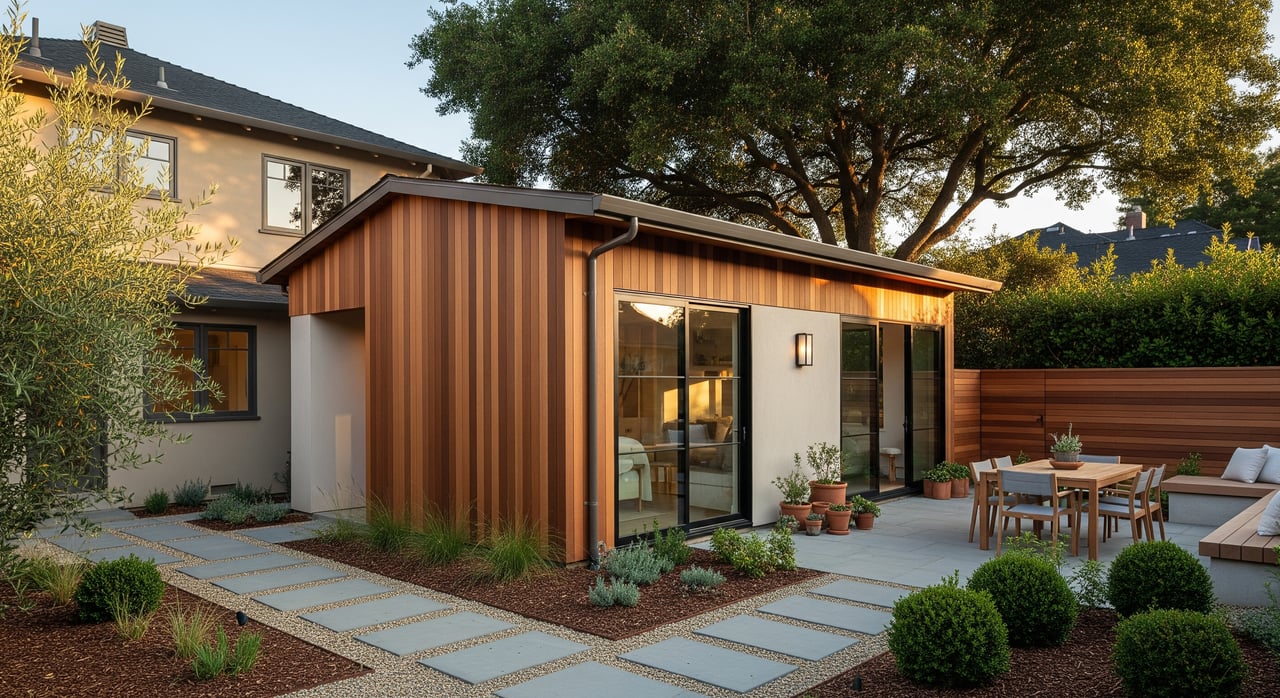
Thinking about adding a small home in your backyard in Walnut Creek? You might want space for family, a home office, or steady rental income, but the rules can feel confusing. This guide breaks down the statewide ADU basics, what you must confirm locally, utility and cost realities, and a clear step-by-step path. Let’s dive in.
ADUs in California: the basics
California sets the foundation for ADUs statewide, and cities like Walnut Creek must align with those laws. If your ADU meets objective standards, your application is typically reviewed ministerially, which means a faster, predictable process. For state-level overviews, start with the California Department of Housing and Community Development’s ADU guidance and FAQs. You can also review the statutory text through California’s Government Code on the state’s legislative site.
- Learn the statewide framework at the California Department of Housing and Community Development.
- Read the statutes via California Legislative Information.
What counts as an ADU or JADU
An ADU is a secondary home on a residential lot. It can be detached, attached, or a conversion of existing space like a garage or basement. Many jurisdictions allow detached or attached ADUs up to around 1,200 square feet, subject to local standards and siting.
A JADU is a “junior” ADU created within the walls of an existing single-family home. JADUs are usually limited to 500 square feet and have their own specific rules. If you are weighing a JADU versus a full ADU, start by confirming your zoning and the layout of your existing home.
Parking, fees, and occupancy
State law limits when cities can require new off-street parking for ADUs. Many ADUs qualify for parking relief, especially if they are near transit, convert existing structures, or meet other criteria. Fees are also scaled in certain cases, and smaller ADUs often benefit from reduced or proportional impact and connection fees.
Owner-occupancy rules have been narrowed by state law, and the number of ADUs allowed depends on your lot type and local implementation. On a typical single-family lot, a common path is one ADU plus one JADU, but you should verify the exact allowances with Walnut Creek planning staff.
What Walnut Creek homeowners must verify
Local details guide the size, placement, and design of your ADU. Your first stop should be the City of Walnut Creek website to find planning and building materials, application checklists, and current fee schedules. You can also look up zoning and development standards in the Walnut Creek Municipal Code.
- Start with the City of Walnut Creek.
- Search local zoning rules in the Walnut Creek Municipal Code.
Zoning and size
Confirm your property’s zoning district and whether the zone allows attached, detached, or conversion ADUs. Ask the Planning Division how Walnut Creek applies state size limits for attached versus detached units. If your home layout works, also consider whether a JADU might be a simpler, lower-cost option.
Setbacks, height, and lot coverage
Walnut Creek’s code sets objective standards for where an ADU can sit on the lot and how tall it can be. Some standards vary by zone and by whether you are converting existing space. Confirm setbacks, height, and any lot coverage or floor-area-ratio rules that may apply to your project.
Design and historic areas
Even with ministerial review, the city can apply objective design standards such as materials, roof form, and window placement. If your property is in a historic district or has landmark status, additional approvals may be needed. This is where an early discussion with city staff can save time.
Parking and driveways
Check Walnut Creek’s current ADU parking standards. Many projects qualify for parking waivers, especially near transit or when converting an existing garage. If new parking is required, confirm how many spaces, where they can be placed, and driveway rules for your lot.
Fees and inspections
Plan for plan check, building permits, and possible impact and utility connection fees. The city’s fee schedule will outline permit costs, and state law limits or scales some fees for smaller ADUs. Ask about inspection stages so you can plan your construction timeline.
HOAs, rentals, and tenant rules
If you live in an HOA, review your CC&Rs and confirm how they treat ADUs. State law limits some HOA restrictions, but it does not eliminate them in all cases. For rentals, check Walnut Creek’s rules for short-term rental use and be aware that California tenant protections apply to rental units.
Utilities and site realities in Walnut Creek
Plan early for water, sewer, electric, and gas. You will coordinate new meters, sub-metering, or service upgrades with each utility provider and pay associated fees. Stormwater, drainage, and tree protections can also affect your design and budget.
Water and sewer
Much of Walnut Creek’s water service is provided by EBMUD. Confirm meter and connection requirements and any capacity reviews directly with the utility. For wastewater, Central Contra Costa Sanitary District serves many Walnut Creek addresses and can advise on laterals, capacity, and connection fees.
- Check water service requirements at EBMUD.
- Confirm sewer connections with Central San.
Electric and gas
PG&E is the primary electric and gas provider in the East Bay. Some ADUs need service upgrades or a separate meter, which can impact costs and timeline. Contact PG&E early to understand requirements for your specific design.
- Coordinate service with PG&E.
Stormwater, trees, and slopes
New roofs and hardscape change drainage, which can trigger stormwater measures and possibly grading permits. Walnut Creek has tree protection standards that may require arborist reports if you work near protected trees. If your site has slope or soils issues, plan for geotechnical input and foundation adjustments.
Costs, timeline, and budget planning
Every site is different, but you can plan for broad ranges to set expectations and guide bids.
- Permitting time: If your plans meet objective standards and your submittal is complete, ministerial review can take a few weeks to a few months. Design or discretionary review, which may apply in special situations, typically takes longer.
- Construction time: Interior or garage conversions often finish in a few months. Detached new builds commonly take 4 to 12 months, depending on scope and contractor availability.
- Cost ranges: Conversions often fall from the tens of thousands into the low six figures, depending on finishes and system upgrades. New detached ADUs usually land in the low to mid six figures, with higher-end projects costing more. Always validate with multiple local bids.
- Fees: Plan for plan check, building permit, impact, and utility connection fees. Check the city’s fee pages and utility providers for current amounts.
Your step-by-step path
Preliminary check. Contact the Walnut Creek Planning Division to confirm zoning, allowed ADU types, and ministerial standards for your lot.
Design and plans. Engage an architect or designer and bring in structural or civil engineering if needed. If you are converting existing space, capture current conditions carefully.
Utility coordination. Reach out early to EBMUD, your sewer district, and PG&E to understand meters, capacity, and any required upgrades.
Submit your application. Follow the city’s ADU checklist with a complete plan set, site plan, utility notes, and any required tree or technical reports.
Plan check and permit. Respond to comments quickly, then pay fees and pull the building permit.
Construction and inspections. Schedule inspections per the Building Division’s requirements and keep records organized.
Final occupancy. Complete final inspection and obtain your certificate of occupancy or approval.
Smart planning tips to avoid delays
- Confirm your parcel’s zoning and standards before you draft plans.
- Walk the site for tree, slope, and drainage constraints and budget for reports if needed.
- Check HOA rules and talk to neighbors early to reduce friction.
- Ask the city about parking requirements and whether a transit-based waiver applies.
- If you are within one half mile of transit, note that parking relief may be available under state rules.
- Build a realistic timeline that includes utility lead times and material availability.
Taxes, insurance, and financing
Adding an ADU usually increases your property’s assessed value for the improvement portion, which impacts property taxes. For local guidance, contact the Contra Costa County Assessor. Many owners use cash, a home equity loan or HELOC, or renovation financing to fund the build. Update your homeowners insurance to cover the new structure and consider additional liability coverage if you plan to rent.
How an ADU fits your long-term plan
An ADU can flex with your life. It can support multigenerational living, create space for work or guests, or produce long-term rental income. It can also influence resale value, which is why you want a thoughtful design, correct permits, and clean documentation.
If you want help understanding neighborhood demand, resale impacts, or how an ADU could fit your move-up or sale strategy, reach out. For local guidance and a quick home value check, connect with Joanna Chen for thoughtful, community-first advice.
FAQs
What is “ministerial” ADU approval in Walnut Creek?
- Ministerial approval means the city reviews your ADU against objective standards and issues decisions without a discretionary hearing process, which can speed up permits when you meet the rules.
How big can my ADU be in Walnut Creek?
- State guidance allows many jurisdictions to permit ADUs up to around 1,200 square feet, and JADUs are usually up to 500 square feet, but local implementation varies, so confirm exact limits with Walnut Creek planning.
Do I need to add parking for my ADU?
- Many ADUs qualify for parking relief, especially if they convert existing spaces or are near transit, but you should verify current standards and any waivers with the city for your specific lot.
Which utilities serve ADUs in Walnut Creek?
- EBMUD typically handles water, Central San serves many areas for sewer, and PG&E provides electric and gas, so coordinate early with each utility for meters, capacity, and fees.
Will building an ADU raise my property taxes?
- Adding an ADU usually increases the assessed value of the improvements and can raise your property taxes, so check with the Contra Costa County Assessor for local guidance and estimates.
How long does an ADU project take from start to finish?
- Plan for weeks to a few months for ministerial permitting and several months for construction, with garage conversions often being shorter and detached new builds taking longer depending on scope and contractors.